Radical Letting Go through the Parables of Ajahn Chah (1918–1992)

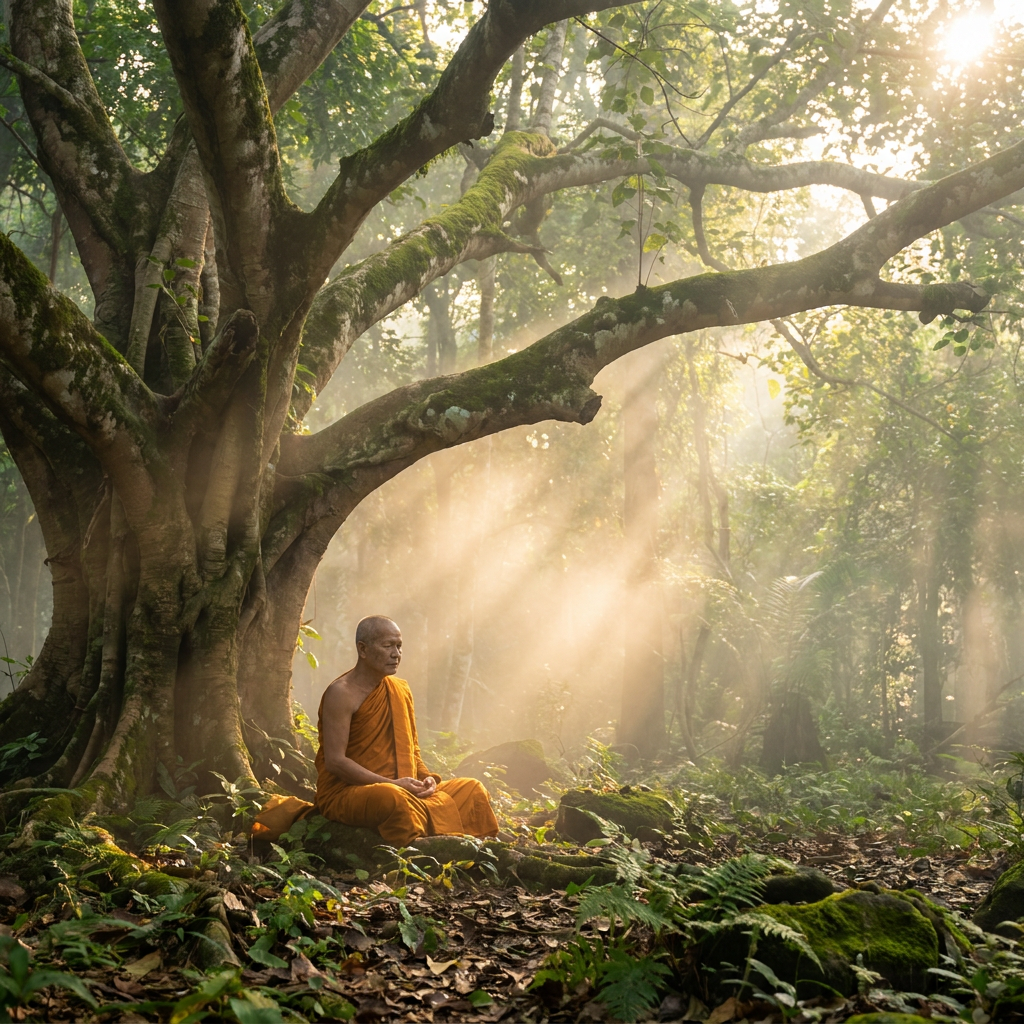
Ajahn Chah in Meditation

In the quiet, canopy-shaded wilderness of North-Eastern Thailand, far from the gilded spires of Bangkok’s royal temples, a profound spiritual renaissance flourished in the 20th century. At the center of this revival was Venerable Ajahn Chah (Phra Bodhinyana Thera, 1918–1992), one of the most revered meditation masters of the Thai Forest Tradition (Kammatthana). Born in a small village in Ubon Ratchathani province, Ajahn Chah possessed a rare, luminous clarity. He translated the dense, metaphysical depths of Theravada Buddhist philosophy into direct, unpretentious daily wisdom.

Rather than relying solely on complex Pali scholasticism, Ajahn Chah taught through living parables, razor-sharp observation, and an unshakeable commitment to monastic discipline (Vinaya). His method was simple yet radical: to show practitioners how suffering originates in our fierce attachment to transient things, and how liberation is found in the art of letting go (Patinissagga).

1. The Teacup Already Broken: An Epistemology of Impermanence

Among Ajahn Chah’s most famous allegories is his teaching on a simple glass teacup. Visitors to his monastery, Wat Nong Pah Pong, often sought ways to deal with grief, anxiety over impending loss, or attachment to loved ones and material comfort. To illuminate the nature of impermanence (Anicca), the master would lift a clear glass teacup and speak to his disciples:

"Do you see this glass? To me, it is already broken. I enjoy it; I drink out of it. It holds my water admirably, sometimes even reflecting the sun in beautiful ways. But when the wind blows it off the shelf and it shatters, I say, 'Of course.' When I understand that this glass is already broken, every moment with it is precious."
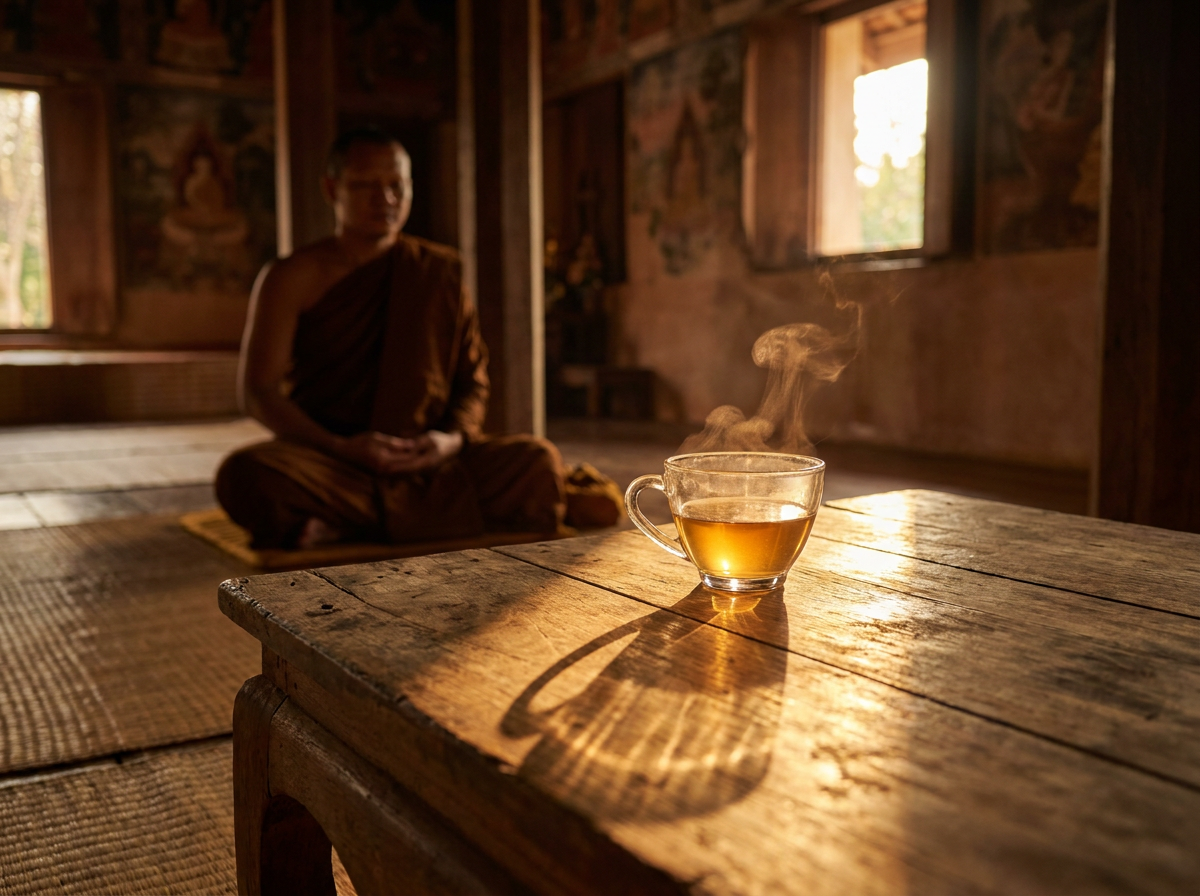
The Broken Teacup Parable

This teaching cuts to the core of Buddhist phenomenology. In Ajahn Chah’s worldview, most people live in a state of anticipatory friction—clinging to objects, status, and relationships as if they were permanent, and suffering deeply when they inevitably change or decay. By seeing the end of a thing at its very beginning, one does not become cold or detached; rather, one gains the freedom to appreciate the present moment fully, unburdened by fear of loss.

2. Carrying the Heavy Branch: The Mechanics of Release

Modern minds frequently mistake spiritual practice for a process of acquiring—gaining merits, achieving higher states of absorption (Jhana), or collecting intellectual knowledge. Ajahn Chah constantly turned this assumption on its head, illustrating that real practice is not about picking things up, but putting them down.

On one occasion while walking through the jungle trail of the monastery, Ajahn Chah noticed a young monk straining under the weight of a heavy fallen tree branch he had picked up to clear the path. Observing the monk's exhaustion, Ajahn Chah halted and asked him a disarmingly straightforward question:

"Is that branch heavy?"

The monk gasped out, "Yes, Tan Ajahn, it is very heavy!"

Ajahn Chah smiled serenely and replied:

"It is only heavy if you carry it. If you drop it, where is the weight?"

This deceptively simple exchange encapsulates the practical psychology of Dukkha (unsatisfactoriness or suffering). The heavy branch represents our mental grievances, past regrets, worries for the future, and opinions we hold onto so tightly. Ajahn Chah demonstrated that our mental suffering is not inherent in the thoughts or circumstances themselves, but in our stubborn refusal to drop them.

3. Fleeing Temptation under the Moonlight: The Crucible of Discipline

While Ajahn Chah was celebrated for his warm humor and gentle metaphors, his own early years as a wandering forest monk (Dhutanga) were forged in extreme asceticism and unyielding moral purity (Sila). The Thai Forest Tradition places immense value on remaining vigilant against the defilements of the mind (Kilesas).

During his early years of solitude, before he became a renowned master, the young monk found himself staying near a village where sensual temptations began to cloud his mind. The subtle stirrings of worldly desire and lust threatened to breach his monastic vows. Recognizing that the mind in its unrefined state can easily rationalize unskillful actions, Ajahn Chah took immediate, decisive action.

Fleeing in the Moonlight

In the middle of the night, bathed only in pale moonlight, he packed his modest robes and alms bowl. Without waiting for dawn or making excuses to delay, he slipped away silently into the deep jungle. He chose to brave wild tigers, malaria-carrying mosquitoes, and total solitude rather than allow his mind to succumb to temptation and compromise his Vinaya.

This escape in the moonlight highlights a crucial aspect of Ajahn Chah's legacy: liberation requires radical honesty and decisive boundary-setting with one's own ego. When temptation strikes, true wisdom lies not in negotiating with defilements, but in removing oneself from their grasp until internal strength is forged.

The Global Ripple of Forest Dhamma

Ajahn Chah’s uncompromising yet compassionate approach eventually transformed Wat Nong Pah Pong into an international hub for Buddhist practice. Recognizing that the thirst for truth transcends cultural boundaries, he established Wat Pah Nanachat (The International Forest Monastery) in 1975, training generations of Western disciples—including Ajahn Sumedho, Ajahn Pasanno, and Jack Kornfield—who subsequently brought the Forest Tradition's teachings to the West.

Through his timeless parables and iron-willed dedication, Ajahn Chah left a legacy that continues to illuminate the path for seekers across the world. In a culture obsessed with accumulating wealth, status, and experiences, the Forest Master's quiet voice still resonates across the decades: Let go, be still, and see things as they truly are.


Published by Ancient Amulet | Thai Forest Tradition Archive

Pra Somdej Ya Wasana Pim Yai Ok Rong 2513 BE - Luang Pu Tim - Wat Laharn Rai

Pra Somdej Pim Yai Ok Rong Luang Pu Tim - Nuea Pong Ya Wasana Jinda Manee Klueab Yang - Luang Phu Tim (Released at Wat Pai Lom in 2513 BE)

This is a recognized official member of the 'Pra Chud Luang Pu Tim', made in 2513, and released at Wat Pai Lom 2514 BE) This amulet is classifiable as a 'Pra Anuraks' (Conservation Class Model Amulet) of the Dtamra Luang Phu Tim, of Wat Laharn Rai (Rayong).This classic competition class amulet is a well known category of competition entry, and a popular show-piece for serious collectors.

Above and beyond this, the amulet is an authentic Sacred Buddha Image blessed and made in 2513 by Luang Pu Tim, released in 2514, in a ceremony held at Wat Pai Lom in Rayong Province (one of the Luang Pu Tim lineage temples).


This edition featured Pra Somde amulets in white and brown powders, in various models (Pim), Pra Luang Por Dto, Pra Pong Nang Kwak, and various other Sacred Powder Amulets such as Pra Nang Paya, Pra Ha Tat, Pra Pid Ta, and other famous Benjapakee style and Pra-Kru style amulets.

was empowered by Luang Pu Tim of Wat Laharn Rai. The amulet was made in 2513, but released one year later in 2514 BE, after a second Buddha Abhiseka ceremony at Wat Pai Lom. An extremely recommendable collectors piece for your personal museum, for its high Puttakun value, but still affordable price compared to many other models, such as the Rian Jaroen Porn and the Rian Sema Luang Phu Tim.

Who knows how much longer these Amulets will remain at an affordable price? At the latest, when the other preferred editions are already snapped up, then, these famous and sacred amulets, will also begin to raise their standard price, and eventually fall out of reach of all but the richest collectors.

The Famous 'Yant Ha' (Yant Pra Jao Ha Pra-Ongk), of Luang Pu Tim is embossed in relief into the rear face of this most classic, rare, sacred, powerful, but still affordable Pra Kru amulet.


The event was performed with Luang Pu Tim presiding over the empowerment and Buddha Abhiseka ceremony.

Containing his famous Muan Sarn Sacred Powders that are now legendary and priceless the world over. This particular exhibit has surprisingly never entered into competition, but is in our opinion worthy of a prizewinning status and would easily take the buiscuit in its category in any and all but the most high end competitions of world class category. It can stand its ground against many an amulet ten times the price, and would be proud to be worn by even the Multi Millionaire, simply because of its Class, Status and Revered Master Monk who made and blessed it.

Officially catalogued and admitted into the top prize-giving competitions, this is a perfect amulet to begin on a smaller budget to enter into the High End Category of Thai Buddhist Amulet collectorship, and competition grade amulets for entry into the world of Pro-Collector Sacred Ancient Amulets of the First Class.


There are many different colored mineral derived elemental substances, which give the amulet an inimitable appearance when you exmaine the surface textures to find the different components of the Muan Sarn Sacred Powders within the amulet, and if present, can authenticate and confirm its validity.

The amulet should be known to have a glaze coating of herbal sap-type resin, which is part of the knowledge needed for authentication. Some example will have reddish like stains, which results from some amulets having received a thicker coat of the herbal lacquer.

The amulets are made from a Muan Sarn Sacred Powders composed of a large variety of sacred clay earths, herbal pollens and powders, and Puttakun powder. Herbs and Sacred ingredients with all sorts of different blessings and powers were added to gif a complete range of blessings.

Luang Phu Tim Issarago of Wat Laharn Rai is perhaps most famous for his Pra Khun Phaen Prai Kumarn, and his ultra powerful and now totally depleted at the temple ‘Pong Prai Kumarn’ powders, used in his famous Pra Khun Phaen amulets and Look Om Pong Prai Kumarn

Luang Phu Tim stands amongst the top ten Guru masters of Thai Amulet History, and Hence, this amulet can only be recommended for its status, sacred value, magical power, artistic appreciation, and collectorship value.

Especially considering how low its price is compared to other amulets from this master, and the added benefit that this amulet is accepted just as easily into competition, as other amulets of a much, much higher price entry level.


The amulet was made in both white powders and also in Ya Wasana Jinda Manee powders, which have a reddish-brown clay-like appearance. The brown-red versions were given a coat of ‘Yant’ (a glaze lacquer). These versions should be known to have a glaze coating of herbal sap-type resin, which is part of the recognition factors useful for knowledge needed for authentication. Some example will have reddish like stains, which results from some amulets having received a thicker coat of the herbal lacquer.

The amulets are made from a Muan Sarn Sacred Powders composed of a large variety of sacred clay earths, herbal pollens and powders, and Puttakun powder. Herbs and Sacred ingredients with all sorts of different blessings and powers were added to gif a complete range of blessings.

Luang Pu Tim Issarago of Wat Laharn Rai is perhaps most famous for his Pra Khun Phaen Prai Kumarn, and his ultra powerful and now totally depleted at the temple ‘Pong Prai Kumarn’ powders, used in his famous Pra Khun Phaen amulets and Look Om Pong Prai Kumarn

Luang Pu Tim stands amongst the top ten Guru masters of Thai Amulet History, and Hence, this amulet can only be recommended for its status, sacred value, magical power, artistic appreciation, and collectorship value.

Especially considering how low its price is compared to other amulets from this master, and the added benefit that this amulet is accepted just as easily into competition, as other amulets of a much, much higher price entry level.

Find this most pristine, sacred and ultra collectible amulet in Ajarn Spencer Littlewood's personal Hobby Collection store; Ancient Amulet
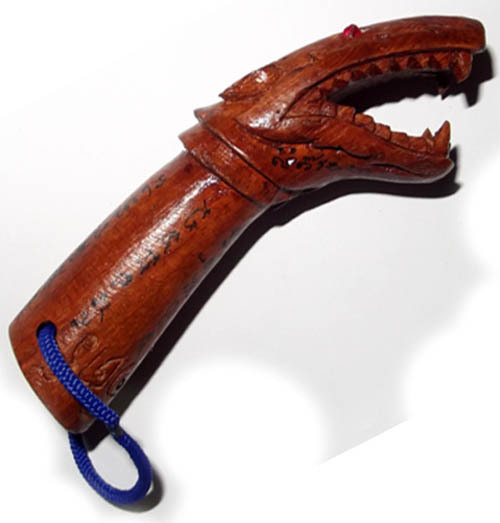
Palad Khik Hua Chamot – Civet Head Magic Charm Hand Carved from Holy Wood – Luang Por Jidt


A perfect solution to those seeking the Palad Khik Hua Chamot of Luang Por Pina, but who can either not find an authentic one, or can not afford such an extravagant item.

The Palad Khik was made in two different sizes, portable and large Bucha size for hanging in the place of business, automobile, or home (or wearing if you like large amulets)

The whole surface of the Palad Khik has recieved individual Hand Inscription of Khom Agkhara Spells from Luang Por Jidt. The gemstone Eyes are previously and individually empowered likewise.


Palad Khik Hua Chamot Large Version - Civet Head Animist Charm with Red Gemstone Eyes - Hand Carved Holy Wood 5 Inch Long - Luang Por Jidtr
$235 U.S.